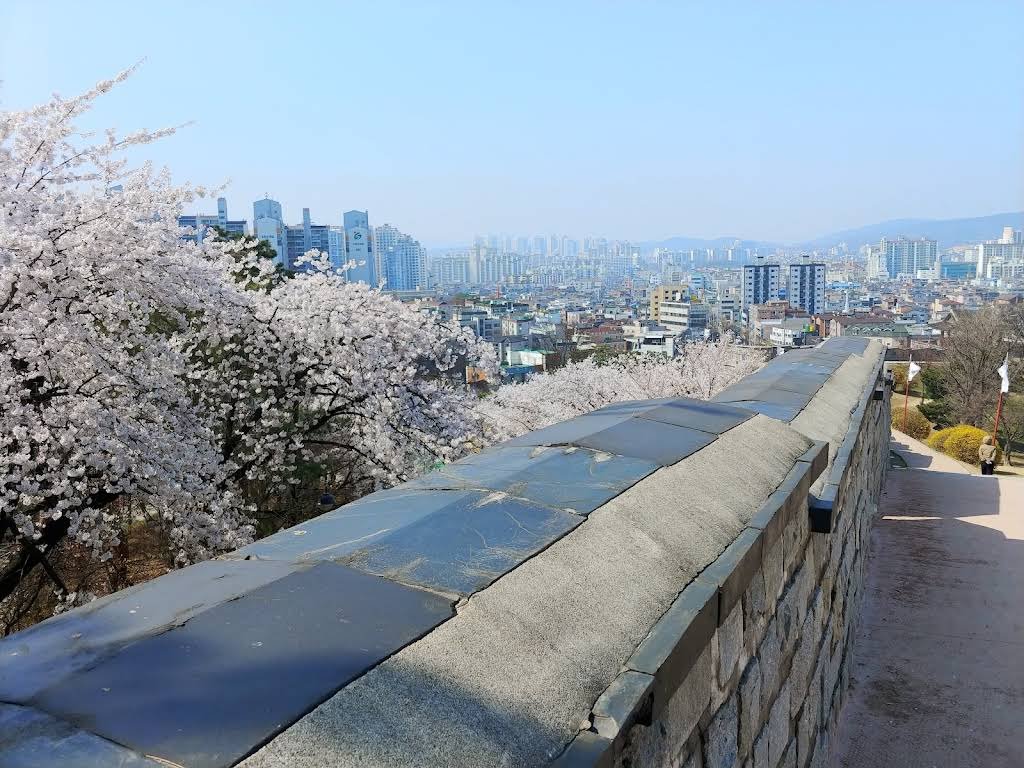
In early April, the ancient stone walls of Hwaseong Fortress disappear under a canopy of pink petals. By July, those same walls vanish behind sheets of monsoon rain. That single contrast tells you almost everything you need to know about the best time to visit Suwon.
Most guides default to a lazy “spring or fall” answer without giving you actual dates, weather numbers, or festival timing. This post fixes that. You’ll get a month-by-month breakdown, cherry blossom and foliage windows for 2026, festival calendars, the worst times to avoid, and real packing advice tied to Suwon’s specific climate.
I’ve visited Suwon across all four seasons, including peak bloom and the autumn cultural festival, and what follows is the honest answer I’d give a friend planning their first trip.
The Best Time to Visit Suwon at a Glance
If you only have time for one line: visit Suwon in April for cherry blossoms, or October for crisp foliage and the Suwon Hwaseong Cultural Festival. May and September are smart shoulder picks if you want fewer crowds and slightly better prices.
Suwon-si sits in Gyeonggi Province, just south of Seoul, and it follows the same continental climate pattern as the capital. That means four distinct Suwon seasons, with two clear winners and two seasons that need more careful planning.
Best Month for Each Goal
| Your Goal | Best Month | Why |
|---|---|---|
| Cherry blossoms (beotkkot) | Early April | Peak bloom April 5 to 12 in 2026 |
| Autumn foliage (danpung) | Mid to late October | Crisp 12 to 22°C, clear skies |
| Cultural festivals | Late Sept to early Oct | Suwon Hwaseong Cultural Festival |
| Budget travel | January or July | 30 to 50% off peak prices |
| Fewer crowds | November or February | Quiet fortress, dramatic light |
| Night views & illumination | Sept to Oct | Media Art Festival evenings |
Suwon Weather by Month: A Year-Round Climate Breakdown
Suwon has a Köppen Cwa continental climate with severe dry winters and hot, humid summers. The annual average temperature is around 11.5°C, with roughly 1,154 to 1,185 mm of precipitation per year and humidity peaking near 77 to 80% in July.
Spring in Suwon (March to May)
Daytime temperatures climb from 10°C in March to 22°C by May. Cherry blossoms hit Suwon in early April, and May is actually the sunniest month of the year with around 225 hours of sunshine. Watch for fine-dust haze in March.
Summer in Suwon (June to August)
Average highs sit between 26.8°C and 29.8°C, with August the hottest month. The changma monsoon peaks in July, dumping up to 289 to 351 mm of rainfall across 14 to 16 rainy days. Humidity feels suffocating.
Autumn in Suwon (September to November)
Highs slide from 25.9°C in September to 12°C in November. Rainfall drops sharply, humidity falls, and the skies turn deep blue. Foliage peaks mid to late October. This is widely considered the most comfortable stretch.
Winter in Suwon (December to February)
Highs of 2 to 5°C, nights down to -7 or -8°C. January is the driest month at just 22 to 23 mm of precipitation. Light snow on the fortress walls is possible, especially early January.
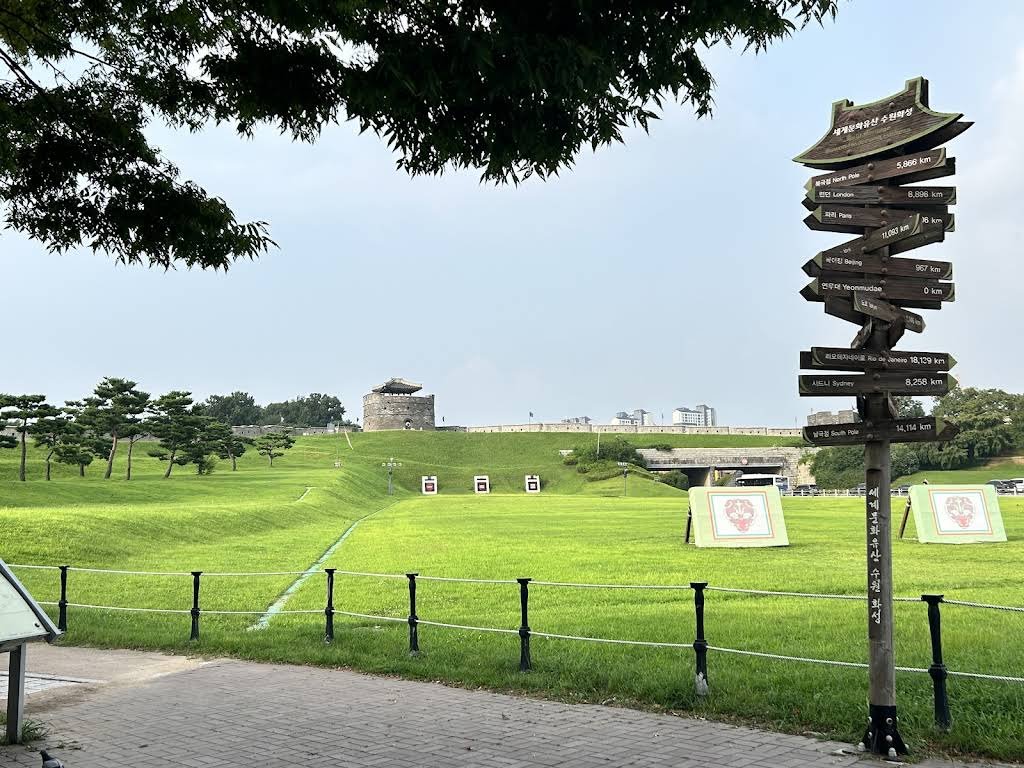
Suwon Climate Guide: Month-by-Month Comparison
| Month | Avg High / Low | Crowd | Avg Hotel Price (3-star) | What’s Happening | Check Live Rates |
| Jan | 4°C / -7°C | Very low | ₩55,000–75,000 (≈ $40–55) | Snow on fortress, quietest month | Book January stays |
| Feb | 5°C / -5°C | Very low | ₩55,000–75,000 (≈ $40–55) | Cold but dry, last winter views | Book February stays |
| Mar | 11°C / 0°C | Low | ₩70,000–95,000 (≈ $50–70) | Yellow dust possible, pre-bloom | Book March stays |
| Apr | 18°C / 6°C | Very high | ₩130,000–200,000 (≈ $95–145) | Cherry blossom peak | Book April stays |
| May | 23°C / 13°C | Medium | ₩90,000–130,000 (≈ $65–95) | Sunniest month, great walking | Book May stays |
| Jun | 27°C / 17°C | Low | ₩70,000–95,000 (≈ $50–70) | Pre-monsoon humidity | Book June stays |
| Jul | 29°C / 22°C | Very low | ₩55,000–80,000 (≈ $40–58) | Monsoon peak, 16 rainy days | Book July stays |
| Aug | 31°C / 22°C | Low | ₩70,000–95,000 (≈ $50–70) | Hot, humid, typhoon risk | Book August stays |
| Sep | 26°C / 16°C | Medium | ₩95,000–140,000 (≈ $70–100) | Cultural Festival begins | Book September stays |
| Oct | 22°C / 10°C | Very high | ₩140,000–210,000 (≈ $100–150) | Foliage + festival peak | Book October stays |
| Nov | 12°C / 2°C | Medium | ₩75,000–100,000 (≈ $55–72) | Quiet, moody, photogenic | Book November stays |
| Dec | 5°C / -4°C | Low | ₩60,000–85,000 (≈ $45–62) | Festive lights, cold | Book December stays |
Spring in Suwon (March to May): The Cherry Blossom Season
When Do Cherry Blossoms Bloom in Suwon? (2026 Forecast)
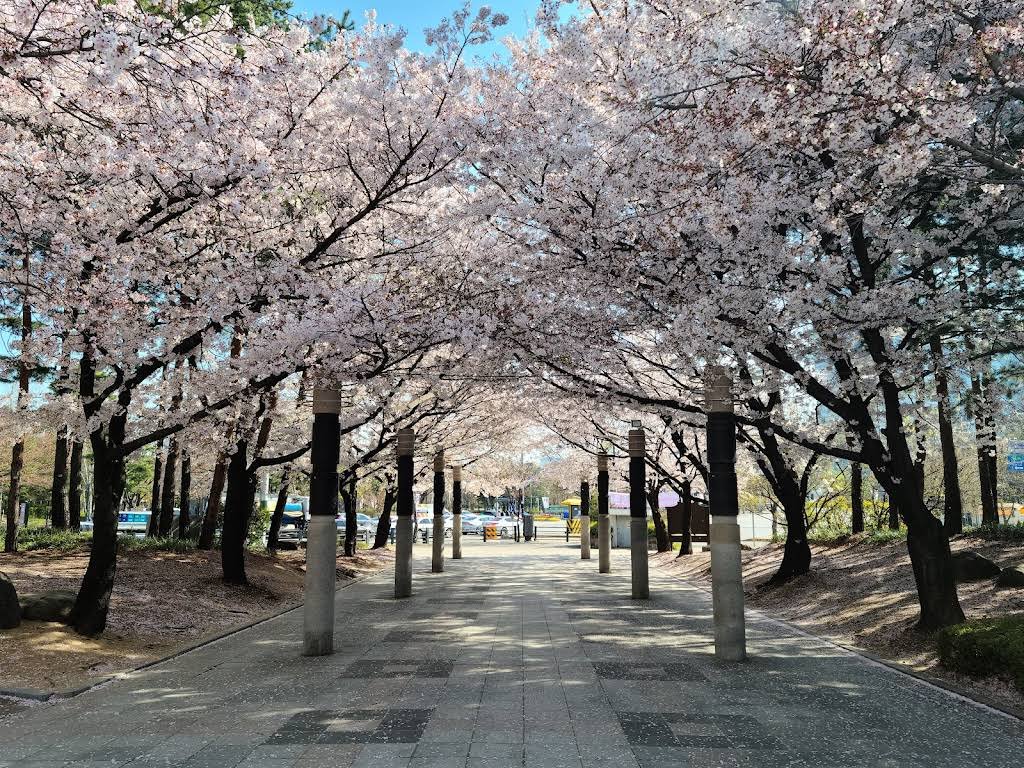
First bloom usually lands in early April, with peak bloom expected April 5 to 12, 2026. According to the official VisitKorea forecast, blooms across central Korea are running 2 to 7 days earlier than the long-term average due to warmer spring temperatures. Full bloom lasts only 7 to 10 days, so timing matters.
Insider Tip: Check the Weather i cherry blossom forecast in late February each year. It’s the gold standard Korean meteorologists use to time blooms.
Best Cherry Blossom Spots in Suwon
- Hwaseong Fortress wall trail & Nampo-ru: Pink canopy over UNESCO stone walls, the iconic shot.
- Paldalsan Mountain trail: Older king cherry trees forming a near-perfect tunnel.
- Gwanggyo Lake Park: Higher elevation means blooms peak later and linger longer.
- Suwon Cherry Blossom Street (Hwanggujicheon): Perfect for a picnic and afternoon stroll.
Suwon vs Seoul Cherry Blossoms
Yeouido and Seokchon Lake in Seoul are spectacular but heaving with people. Suwon offers a calmer, history-framed experience. The arched Nampo-ru gate became famous after appearing in Twenty-Five Twenty-One and Golden Spoon, but it’s still less mobbed than the Seoul hotspots.
My experience: I visited Nampo-ru on April 8, 2025, at 7:30 a.m. Petals at peak, fewer than 20 people on the wall, and the morning light made the stones glow gold. By 10 a.m., the same spot had 200+ visitors.
Late Spring (May)
May brings 23°C days and the year’s most sunshine. Cherry blossoms are gone, but azaleas and forsythias take over.
Shoulder pricing kicks in, and you can comfortably walk the full 6 km fortress loop without sweating.
Summer in Suwon (June to August): Monsoon, Heat & What’s Still Worth It
The Changma Monsoon Explained
The changma is Korea’s east Asian monsoon. It typically runs from late June to late July, with July averaging 14 to 16 rainy days and 289 to 351 mm of rainfall. Fortress walks become impossible during heavy downpours.
Typhoon Risk
Late summer through early autumn is typhoon season. Suwon’s inland position cushions direct hits, but heavy rain and gusty winds can still hit hard, especially mid-August through early September.
Why Some Travelers Still Come
- Lowest hotel prices of the year outside of January.
- Almost no foreign tourists, so attractions feel local.
- Lush green fortress walls that look completely different from spring or autumn.
- Indoor escapes like the stunning Starfield Library Suwon and the cafes along Haengnidan-gil.
Summer Survival Tips
- Visit the fortress at sunrise or after 6 p.m. to dodge heat.
- Download AirVisual for real-time air quality.
- Carry a sturdy umbrella and quick-dry layers, not waterproofs (you’ll sweat through them).
- Hydrate constantly. Convenience stores sell cold barley tea (boricha) on every corner.
Autumn in Suwon (September to November): Foliage + Festival Season
Why October Is the Autumn Sweet Spot
Temperatures sit between 12 and 22°C with low humidity, clear skies, and rainfall down to just 50 mm.
Foliage peaks mid to late October, painting the fortress trails in red, orange, and gold. Most locals will tell you this is the best month of the year, full stop.
Suwon Hwaseong Cultural Festival
This is the city’s signature event, running for over 60 years. The 62nd edition in 2025 was held September 27 to October 4, and 2026 dates are expected to land in the same window. The festival reimagines King Jeongjo’s 1795 royal celebration for his mother Queen Hyegyeong’s 60th birthday.
Highlights include King Jeongjo’s Royal Procession Reenactment (Korea’s largest royal parade), nighttime military drills, water performances at Banghwasuryujeong Pavilion, the Suwon Lantern of Love Festival, and the Suwon Food Culture Festival. Entry is free.
Book hotels 6 to 8 weeks ahead. Confirmed dates appear on the official festival site and through korea.net
Suwon Hwaseong Media Art Festival
Running roughly late September to mid-October, the “Mancheonmeongwal” media art show lights up Hwaseomun Gate, Janganmun Gate, and Jangan Park every Friday through Sunday from 18:00 to 21:30. The 2025 edition included a Peanuts collaboration with pop-up stores and photo zones.
September Warning
Early September can still feel like summer with humidity and pop-up showers. Weather stabilizes around mid-September. Avoid Chuseok week if possible (dates shift with the lunar calendar), since domestic travel surges and many shops close.
November
Highs drop to 12°C, lows to nearly freezing. Trees are bare by month’s end, but the fortress looks dramatic against grey skies, and prices fall back to shoulder rates.
Winter in Suwon (December to February): Quiet, Cold & Underrated
What Winter Actually Feels Like
Daytime highs of 2 to 5°C, nighttime lows of -7 to -8°C. January is the driest month with just 22 to 23 mm of precipitation, mostly as light snow. Most days are clear, sunny, and bone-dry.
Why Winter Can Be the Best Time
- Hotel prices drop 30 to 50% off peak rates.
- Fortress walls dusted with snow are unforgettable, and you’ll often have them to yourself.
- The illuminated gates look spectacular against early darkness.
- Many of the things to do in suwon at night including Starfield Library, Haengnidan-gil cafes, and the lit fortress trail work beautifully in cold weather.
What to Skip in Winter
Long unbroken fortress walks without proper layers. Outdoor festival programming (most events pause). The Suwoncheon stream looks less picturesque when frozen.
Worst Time to Visit Suwon (And When NOT to Book)
Here’s the honest list most guides won’t give you.
- Mid-March to early April: Yellow dust (hwangsa) and fine particulates can cancel outdoor sightseeing. Always check air quality apps.
- Late June to late July: Peak monsoon. Expect 14 to 16 rainy days and washed-out fortress visits.
- Mid-August to early September: Typhoon risk window combined with peak heat and humidity.
- Chuseok week: Domestic travel surge, packed KTX trains, closed restaurants and shops.
- Cherry blossom peak weekends: Nampo-ru becomes uncomfortably crowded. Visit weekdays, or arrive before 9 a.m.
Best Time of Day to Visit Hwaseong Fortress
Hwaseong Fortress is a UNESCO World Heritage Site completed in 1796, built by King Jeongjo of the Joseon Dynasty. When you visit during the day matters as much as which season.
- Sunrise (06:00 to 08:00): Empty walls, soft light. The single best window for cherry blossom photography in April.
- Mid-morning (09:00 to 11:00): The Hwaseong Trolley begins runs, gates open, good for first-time orientation.
- Golden hour (one hour before sunset): Warm light on stone walls. The Tripadvisor-favorite window for a reason.
- After dark (19:00 to 21:30): Night illumination across Paldalmun, Janganmun, and Hwaseomun gates. Peak magic during the Media Art Festival.
- Weekend vs weekday: Sunday afternoons are busiest. Tuesday to Thursday mornings are quietest.
I walked the wall from Hwaseomun to Janganmun on a Tuesday at 6:45 a.m. in October. Fewer than 10 people on the entire stretch, and the morning fog lifting off Yongyeon Pond was unreal. A practical hwaseong fortress walking route plan helps you cover the highlights without doubling back.
How Long to Spend in Suwon: Day Trip vs Overnight
- 4 to 5 hour express visit: Hwaseong Fortress and Hwaseong Haenggung Palace only. Doable but tight.
- Full day trip from Seoul: Fortress, Haengnidan-gil cafes, Starfield Library, and a dakgalbi or wang-galbi dinner. The classic loop.
- Overnight (recommended for festivals and cherry blossoms): Lets you catch sunrise blooms AND nighttime illumination on the same trip.
- 2 to 3 days: Adds the Korean Folk Village in Yongin, Gwanggyo Lake Park, and deeper neighborhood wandering.
Pro Tip: Anyone asking is suwon worth visiting for just a few hours should know that a proper suwon day trip from seoul itinerary runs full from morning to evening. Plan 8 to 10 hours minimum to do it justice.
How to Get to Suwon from Seoul (And What It Costs by Season)
Sorting how to get from seoul to suwon is straightforward. Three main options, all reliable year-round.
- KTX (fastest, around 30 minutes): Seoul Station to Suwon KTX Station. Reserve via Korail.
- Subway Line 1 (cheapest, around 1 hour): Direct from central Seoul, around 2,000 KRW with a T-Money card.
- ITX / Mugunghwa (mid-range): Comfortable seats, around 45 minutes.
- Apps you’ll actually need: Naver Map, Kakao Map, KakaoT for taxis, and Papago for translation. Google Maps does not work for navigation in Korea.
- K-ETA: Required for most visa-exempt travelers. Apply online before arrival via the official K-ETA portal. Valid for 2 years.
What to Pack for Suwon by Season
- Spring (March to May): Light jacket, scarf, walking shoes, KF94 mask for fine-dust days.
- Summer (June to August): Quick-dry clothing, sturdy umbrella, sunscreen, light long sleeves for fierce AC indoors.
- Autumn (September to November): Layers, light coat, comfortable walking shoes. Optional hanbok rental for fortress photos.
- Winter (December to February): Heavy insulated coat, thermal base layers, gloves, beanie, insulated shoes with grip for icy patches.
Where to Stay in Suwon (And When to Book by Season)
- Peak-season booking (April + early October): Book 6 to 8 weeks ahead. Expect a 30 to 50% premium.
- Shoulder-season value (May, September, November): Better availability, mid-range pricing.
- Off-season bargains (December to February, July): Deepest discounts. Weekday rates are lowest.
- Best neighborhoods: Near Suwon Station for transit access, Paldalmun and Haengnidan-gil for atmosphere, Hwaseo Station for Starfield Library access.
Niche Traveler Tips: Photographers, K-Drama Fans, Families & Solo Travelers
- For K-drama fans: Nampo-ru, Banghwasuryujeong, and the fortress walls look most cinematic at golden hour in April and mid-October. Locations from Lovely Runner, Twenty-Five Twenty-One, and Golden Spoon are all walkable from Haenggung-dong.
- For photographers: Early-morning April for blossoms, late-October golden hour for foliage, January snow days for high-contrast drama.
- For families with kids: Skip monsoon and peak summer heat. The October cultural festival is hands-on and stroller-friendly, and pairs perfectly with the Korean Folk Village.
- For solo travellers: South Korea ranks among the safest destinations globally. Suwon poses very little risk. Weekday shoulder seasons feel most relaxed.
What to Eat in Suwon (And When Restaurants Are Busiest)
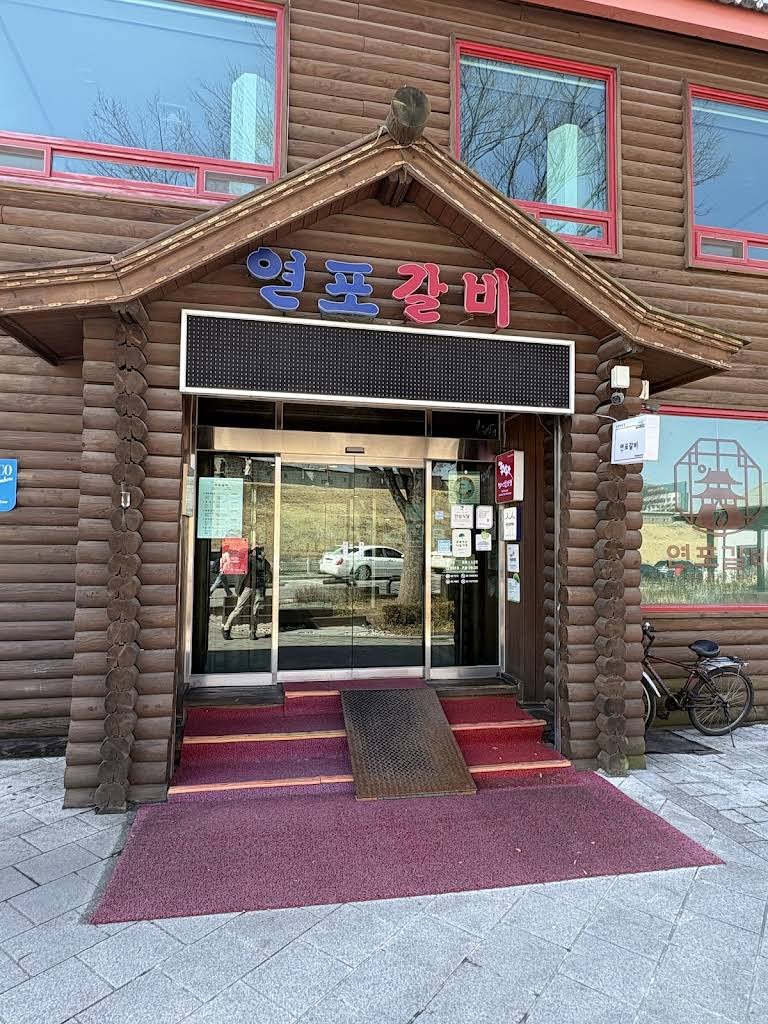
- Wang-galbi (Suwon-style grilled ribs): The city’s signature dish. Top spots like Yeonpo Galbi fill 18:00 to 20:30, especially weekends. Book ahead in peak season.
- Dakgalbi: Spicy chicken with rice cakes, said to have Suwon roots.
- Haengnidan-gil cafes: The hanok-style cafe street. Try Jung Ji-young Coffee Roasters Hwahong for rooftop views of Hwahongmun. Busiest on spring and autumn weekend afternoons.
- Festival food stalls: The Suwon Food Culture Festival runs alongside the cultural festival in late September and early October.
FAQs: Best Time to Visit Suwon
What is the best month to visit Suwon?
April for cherry blossoms or October for autumn foliage plus the Suwon Hwaseong Cultural Festival. Pick April if blooms top your list. Choose October for crisp weather and Korea’s largest royal parade reenactment.
When do cherry blossoms bloom in Suwon?
First bloom typically arrives late March to early April, with peak bloom expected around April 5 to 12 in 2026. That’s 2 to 7 days earlier than the long-term average. Full bloom lasts only 7 to 10 days, so timing is tight.
Is Suwon worth visiting in winter?
Yes. Low prices, no crowds, dry sunny days, and dramatic snow-dusted fortress photography. Just pack heavy layers because January nights drop to -7 or -8°C.
How many days do you need in Suwon?
A 4 to 5 hour day trip from Seoul covers the highlights. A full day or overnight stay lets you experience night illumination and Haengnidan-gil cafes after dark, which most day-trippers miss.
What is the rainy season in Suwon?
The changma monsoon runs late June to late July. July is the wettest month with 289 to 351 mm of rain spread across 14 to 16 rainy days.
Is Suwon a good day trip from Seoul?
Absolutely. KTX takes around 30 minutes from Seoul Station, and Subway Line 1 takes about an hour. Most major sites are walkable from each other once you arrive.
When is the Suwon Hwaseong Cultural Festival held?
Annually in late September to early October at Hwaseong Fortress and Haenggung Palace. The 2025 edition ran September 27 to October 4. The 2026 dates are expected in the same window.
How hot is Suwon in summer?
August peaks at an average high of about 31°C with humidity around 77%. Combined with monsoon rain, it’s the toughest stretch of the year for outdoor sightseeing.
What is the cheapest month to visit Suwon?
July (monsoon) and January (winter low season) are the cheapest. Hotels can drop 30 to 50% below April peak rates.
How do I get from Seoul to Suwon?
KTX (30 minutes, fastest), Subway Line 1 (about 1 hour, cheapest), or ITX and Mugunghwa trains. Suwon Station and Hwaseo Station are the main stops.
Is Hwaseong Fortress free to enter?
The fortress walls and most outdoor pathways are free. Hwaseong Haenggung Palace charges a small admission of around 1,000 to 1,600 KRW.
What is the best time of day to visit Hwaseong Fortress?
Sunrise for empty walls and soft light, golden hour for warm-toned photography, or after dark from 19:00 to 21:30 during the Media Art Festival in autumn.
Can you see cherry blossoms at Hwaseong Fortress?
Yes. The wall trail, Banghwasuryujeong Pavilion, Yongyeon Pond, and Nampo-ru are among the best blossom spots in Gyeonggi Province in early April.
Is Suwon safe for tourists?
Yes. South Korea has one of the lowest crime rates globally, and Suwon poses very little risk. Standard urban precautions apply, especially in crowded festival areas.
When is autumn foliage best in Suwon?
Mid to late October is peak foliage. Lower humidity, clear skies, and crisp 12 to 22°C temperatures make it ideal for long fortress walks.
Are typhoons a problem in Suwon?
Possible from late summer to early autumn, but Suwon’s inland position limits direct hits. Heavy rain and gusty winds are the realistic risks, not catastrophic landfalls.
Final Thoughts: Locking In Your Suwon Trip
The best time to visit Suwon comes down to two clear windows. Go in early April if you want cherry blossoms over UNESCO walls. Go in October if you want foliage, festivals, and the year’s most comfortable weather. May and September are smart shoulder picks. Avoid late June through late July, and skip Chuseok week unless you enjoy crowded trains.
Book accommodation 6 to 8 weeks ahead for April and early October. Off-season travelers in January or July can save 30 to 50% and still have a memorable trip.
Ready to plan? Bookmark this guide, check the official VisitKorea cherry blossom forecast in late February 2026, and lock in your KTX tickets early. Have a question about a specific month? Drop it in the comments. I update this guide after every visit to Suwon.